Management evenimente is the backbone of any successful event, whether it is a conference, workshop, festival, corporate meeting, or private celebration. When organizers coordinate every detail well and participants receive timely information, the entire experience becomes smoother, more professional, and far more enjoyable. In today’s fast-moving environment, comunicare rapidă is no longer a bonus; it is essential. From registration updates to schedule changes and on-site support, clear communication helps reduce confusion, improve attendance, and strengthen trust between organizers and participants.
A well-managed event depends on more than a good venue and a strong agenda. It requires systems, planning, and communication workflows that keep everyone informed before, during, and after the event. When done correctly, management evenimente creates a seamless experience where participants feel guided and organizers stay in control. In fact, the strongest events are often the ones where people notice the experience, not the problems behind it.
Cuprins
- Why Management Evenimente Matters
- The Role of Comunicare Rapidă in Event Success
- How to Improve Communication with Participants
- Tools That Support Efficient Event Management
- Best Practices for Participants and Organizers
- Managing Unexpected Changes Without Disrupting the Event
- Building Trust Through Clear Communication
- The Future of Management Evenimente
- How Mobile Apps Support Event Organizers
- Practical Workflow for Stronger Event Communication
- Conclusion
Why Management Evenimente Matters
Event management is not just about logistics. It is about creating structure and clarity around every stage of the event. Organizers must handle invitations, ticketing, schedules, speaker coordination, access control, and feedback collection. Without a reliable approach, small issues can quickly become major problems.
For participants, good event management means less stress and more value. They know where to go, what to expect, and how to respond if something changes. For organizers, it means fewer last-minute surprises and better ability to solve issues before they grow. The result is an event that feels organized, professional, and trustworthy.
Strong management evenimente also improves brand reputation. People remember when an event runs smoothly and communication is clear. They are more likely to return, recommend the experience, and engage with future events. Over time, that consistency becomes one of the most valuable assets a team can build.
There is also a financial side to good planning. Fewer mistakes mean fewer refunds, fewer support requests, and less wasted time for the team. When communication is structured and responsibilities are clear, management evenimente becomes more efficient and more scalable.
The Role of Comunicare Rapidă in Event Success
Comunicare rapidă plays a crucial role in keeping everyone aligned. In the past, event communication often relied on emails or printed schedules that could quickly become outdated. Today, participants expect instant updates through mobile-friendly channels, automated messages, and real-time notifications.
Rapid communication is especially important in situations such as:
- last-minute schedule changes
- speaker delays or cancellations
- room or venue changes
- emergency instructions
- registration confirmations
- reminders about check-in or session starts
When participants receive timely updates, they can adapt without frustration. When organizers communicate quickly, they avoid misunderstandings and reduce support requests. In practice, fast communication helps events move forward even when unexpected issues arise.
A strong communication strategy should always be planned before the event begins. Waiting until problems happen can lead to confusion. The best management evenimente systems build communication into the process from the start, with clear rules for who sends updates, when messages go out, and which channels are used for urgent announcements.
For many teams, the biggest challenge is not sending a message, but sending the right message at the right time. That is why concise wording, consistent tone, and reliable delivery matter so much in event communication.
How to Improve Communication with Participants
Participants want information that is simple, direct, and useful. They do not want to search through long emails or multiple platforms to find what they need. To improve communication with participants, organizers should focus on clarity and consistency.
If you want a practical example of how digital tools can support this process, see Aplicație mobilă în 7 pași cu Appify, rapid și sigur.
Use one main communication channel
Whenever possible, choose a primary channel for important updates. This could be email, SMS, a mobile event app, or a participant portal. Having one central source reduces confusion and makes it easier to manage messaging.
When participants know where to look first, they are less likely to miss essential updates. That predictability is especially useful for multi-day events, where information may change from one session to the next.
Send updates at the right time
Timing matters. Participants appreciate reminders before the event, clear instructions on the day of the event, and concise follow-up messages afterward. Avoid sending too many notifications, but make sure the most important information arrives early enough to be useful.
A good rule is to send only the messages that help someone take action. If the update does not help a participant decide what to do next, it may be better suited for a summary or FAQ section.
Keep messages short and actionable
Each message should answer a clear question: What happened? What should the participant do next? Where can they find more information? Short, direct communication is more effective than long paragraphs filled with unnecessary detail.
This is one reason management evenimente works best when the team has standard templates ready in advance. A simple, practical message often performs better than a polished message that is too vague.
Personalize where possible
People respond better to messages that feel relevant. Using participant names, registration details, or session preferences can make communication more engaging and easier to follow. Personalization also helps participants feel valued rather than treated as part of a mass audience.
Even small personal touches can improve the experience. For example, a reminder about a selected workshop or a recommendation for a related session can make communication feel more helpful and less generic.
Give participants a clear next step
Whenever possible, every announcement should include a simple next step. That might mean checking in at a certain desk, opening the event app, reviewing an agenda change, or contacting the help desk. A next step turns information into action, which reduces uncertainty.
Tools That Support Efficient Event Management
Modern tools can make management evenimente much easier by automating repetitive tasks and improving communication speed. These tools help organizers stay organized while giving participants a better experience.
Event management platforms
These platforms bring together registration, ticketing, agendas, speaker information, and messaging in one place. They reduce manual work and help ensure that updates are consistent across all channels.
When teams use one system instead of many disconnected tools, they reduce the risk of errors. The result is a more reliable process for both staff and participants.
Automated notifications
Automation can send confirmations, reminders, and alerts without requiring organizers to write every message manually. This saves time and ensures participants receive information quickly.
Automated reminders are especially useful for check-in, session starts, and schedule changes. They help keep the event moving and reduce the number of repetitive questions the team must answer.
Mobile apps
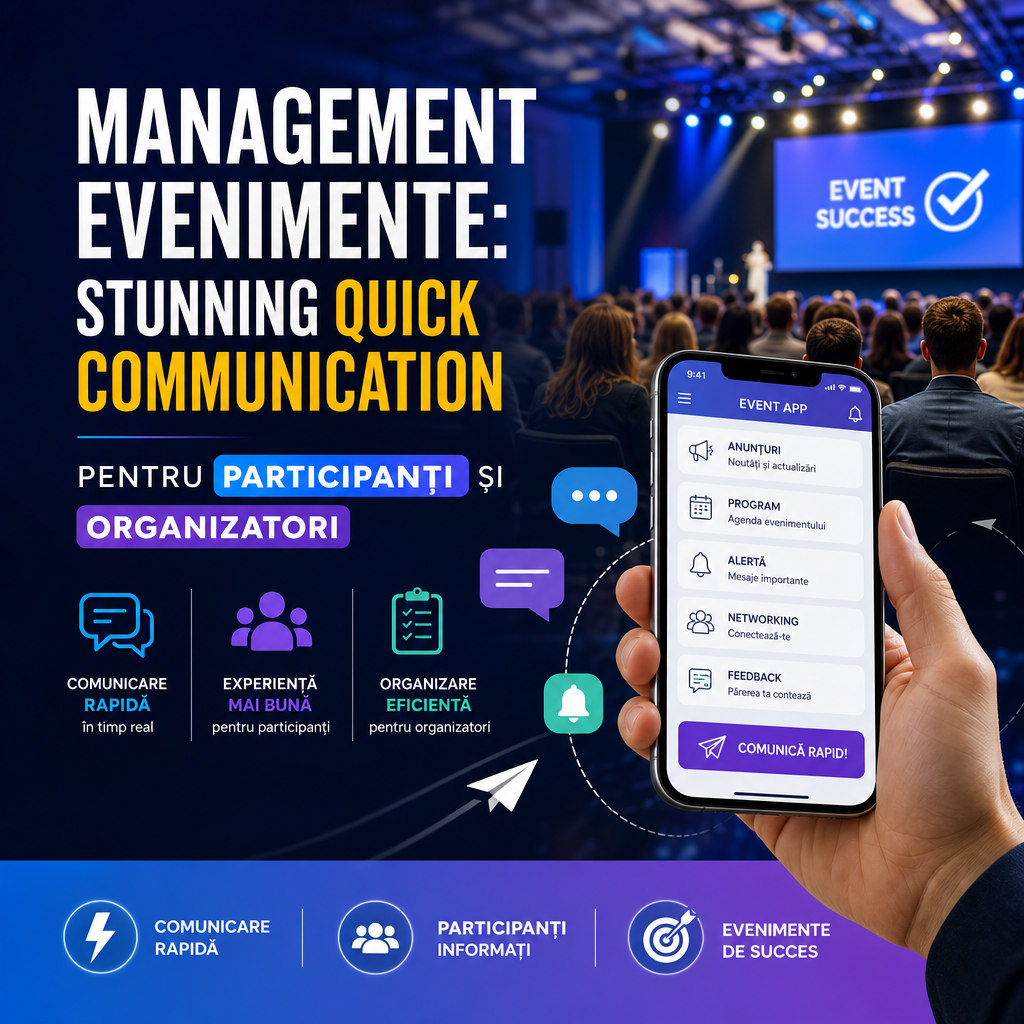
A dedicated event app can be extremely useful for participants. It can provide schedules, maps, session details, push notifications, and live updates. For larger events, this can become the main communication hub.
Mobile apps are particularly valuable because they keep information in one place and make it easy to update details in real time. That convenience helps organizers stay responsive while giving participants a smoother, more confident experience.
Internal team communication tools
Organizers also need efficient communication behind the scenes. Tools for internal chat, task tracking, and shared documents help teams respond faster and coordinate responsibilities more effectively.
When the internal team is well coordinated, external communication improves too. Staff members know what is happening, who is handling what, and when a message should be sent to participants.
Published guidance and standards
For organizers who want to understand digital delivery and mobile-ready experiences better, the MDN guide to progressive web apps is a useful reference. It explains how web-based experiences can be made more app-like and easier to use on mobile devices.
Best Practices for Participants and Organizers
The relationship between participants and organizers is strongest when both sides know what to expect. Good event management creates a structure that supports that relationship from start to finish.
For organizers
– Share essential details early
– Confirm registration and attendance promptly
– Provide clear instructions for arrival and check-in
– Prepare backup plans for delays or technical issues
– Monitor questions and respond quickly
– Update all channels at the same time to avoid conflicting information
For participants
– Read event updates carefully
– Check official channels before arriving
– Save important contact information
– Use provided apps or portals for real-time details
– Report issues as soon as they appear
When both organizers and participants follow these habits, the event runs more smoothly and communication becomes more effective. This is one of the simplest ways to make management evenimente feel easier on both sides.
Organizers can also improve outcomes by testing their communication process before the event starts. A short internal rehearsal can reveal gaps in timing, message clarity, or responsibility assignment before those issues affect participants.
Managing Unexpected Changes Without Disrupting the Event
Even the best-planned event can face unexpected challenges. A speaker may arrive late, weather may change plans, or equipment may fail. The difference between a stressful event and a successful one is often how quickly the team responds.
This is where comunicare rapidă becomes a competitive advantage. A fast, clear update can prevent rumors and keep participants calm. Instead of waiting for questions to spread, organizers can send a direct message explaining the situation and next steps.
To handle change well, event teams should prepare message templates in advance. Having prewritten alerts for delays, venue changes, or emergency instructions saves valuable time. Staff should also know who is authorized to send updates, so messages remain accurate and consistent.
It is also smart to prepare a backup communication path. If one channel fails or is overloaded, the team should already know what to use next. That simple precaution can protect the event from avoidable confusion.
Management evenimente becomes much easier when there is a calm response process. Instead of reacting emotionally, the team can rely on a clear sequence: assess the issue, choose the right message, send it to the correct audience, and monitor the response.
Building Trust Through Clear Communication
Trust is one of the most valuable outcomes of effective management evenimente. When participants receive accurate information on time, they feel respected and supported. When organizers communicate honestly and efficiently, they build credibility.
Clear communication also reduces frustration. Many event complaints come from simple misunderstandings: a room changed without notice, a session started earlier than expected, or a speaker was delayed with no explanation. These situations are easier to manage when participants are informed immediately.
Trust is built over time, but it can be damaged quickly by poor communication. That is why every message matters. A well-timed update can make participants feel that the event is in capable hands, even during stressful moments.
Transparency also matters. If something changes, explain it clearly. If a delay is unavoidable, acknowledge it instead of hiding it. In most cases, people are more patient when they understand the reason and know what happens next.
The Future of Management Evenimente
Event management continues to evolve with technology. Artificial intelligence, automation, mobile-first platforms, and data-driven planning are changing how organizers connect with participants. In the future, communication will likely become even faster, more personalized, and more predictive.
Organizers will be able to anticipate participant needs better, send smarter notifications, and adjust schedules in real time. At the same time, participants will expect instant access to information and a more interactive experience. The events that succeed will be the ones that combine strong planning with responsive communication.
This evolution is not only about convenience. It is also about reliability. As events become more complex, the ability to manage details quickly and accurately will matter even more. That means management evenimente will increasingly depend on tools that reduce manual work and improve visibility for everyone involved.
For smaller teams, this shift can be a major advantage. The right digital tools can help them operate with the confidence and speed of a much larger organization.
How Mobile Apps Support Event Organizers
For modern teams, a mobile app can turn management evenimente into a more flexible and responsive process. It gives participants one place to check agendas, read announcements, and find practical details without switching between multiple channels. That convenience matters especially at busy conferences and multi-day gatherings.
A mobile-first approach also supports rapid issue resolution. If a room changes, a session starts late, or an announcement must reach everyone at once, the update can be delivered immediately. This is one reason many organizers now treat the app as a central part of their communication strategy instead of a secondary add-on.
When exploring ways to convert a website into a participant-facing app, organizers can also review Conversie site în aplicație: 7 pași simpli pentru o aplicație business puternică. For technical context on how mobile websites are presented in app form, the MDN guide to progressive web apps is a useful reference.
For event organizers, the real advantage is consistency. A mobile app keeps key details in sync, reduces repeated questions, and supports a more professional experience from registration to closing remarks. In practice, that means management evenimente becomes easier to oversee and easier for participants to follow.
When teams choose the right platform, they can also centralize announcements, collect feedback, and guide attendees through the event journey in a more elegant way. This makes management evenimente feel less fragmented and more strategic.
Practical Workflow for Stronger Event Communication
One of the best ways to improve management evenimente is to build a repeatable workflow. A good workflow removes guesswork and helps the team stay consistent under pressure.
1. Plan the communication points early
Before the event begins, identify the moments when participants need information most: registration, reminders, arrival, session changes, breaks, and follow-up. Planning these moments in advance makes it easier to send the right message at the right time.
2. Draft templates for common situations
Templates save time and keep the tone consistent. Prepare messages for confirmations, delays, venue changes, and support requests. The goal is not to sound robotic, but to avoid starting from scratch when time is limited.
3. Assign responsibility clearly
Every team should know who approves, who sends, and who monitors responses. Clear roles reduce delays and prevent duplicated or conflicting updates.
4. Review messages before sending
A quick review can catch errors in dates, times, names, or locations. In event communication, small mistakes can lead to big confusion, so a final check is always worth the time.
5. Learn from participant feedback
After the event, ask what information was helpful and what was missing. Feedback helps organizers improve future communication and refine the way they manage events.
This workflow makes management evenimente easier to repeat, improve, and scale. It also creates a better experience for participants because the information they receive feels more predictable and trustworthy.
Conclusion
Management evenimente is about more than organization; it is about creating a smooth experience through structure, preparation, and comunicare rapidă. When participants receive timely, clear updates, they feel informed and confident. When organizers have the right tools and processes, they can manage challenges without losing control.
Whether the event is small or large, the principles remain the same: communicate early, respond quickly, keep messages simple, and put the participant experience first. With the right approach, event organizers can deliver events that are efficient, professional, and memorable for everyone involved.
As events become more digital and more demanding, management evenimente will increasingly depend on tools that keep people connected in real time. That makes planning, messaging, and participant support even more important for long-term success. In practice, the teams that prepare well and communicate clearly are the ones that create the best event experiences.
For organizers who want a stronger, calmer, and more reliable process, management evenimente should always combine human planning with smart digital support. That combination makes it easier to scale events, protect participant satisfaction, and deliver results that last beyond the day of the event.